Walleye: Complete Species Guide
Ask a group of Midwestern anglers which freshwater fish they love catching most, and walleye will win almost every argument. It's North America's premier cool-water game fish — the fish that fills Minnesota's lakes, powers Lake Erie's charter fleet, and shows up at family fish fries from Ohio to the Dakotas.
Walleye fishing is a way of life across the northern US, and for good reason: they bite hard, taste incredible, and grow to double-digit weights in the right waters.
This complete walleye guide covers how to identify this species, where it lives, what it eats, how big it gets, and the best ways to catch it. New to fishing? Our fishing for beginners guide will get you on the water — walleye are an ambitious but rewarding early target.
What Is a Walleye? A Perch in Disguise
The walleye (Sander vitreus) is a large predatory fish in the perch family (Percidae) — the same family as yellow perch and sauger, not bass. Despite the nickname "walleyed pike," it is no relation to northern pike at all.
Walleye species in North America are divided into two groups: the common yellow walleye and the now-extinct blue walleye (or "blue pike"), a Great Lakes subspecies that vanished from Lake Erie in the 1960s. Every walleye caught today is the yellow walleye, whether it comes from a Minnesota lake or a Tennessee reservoir.
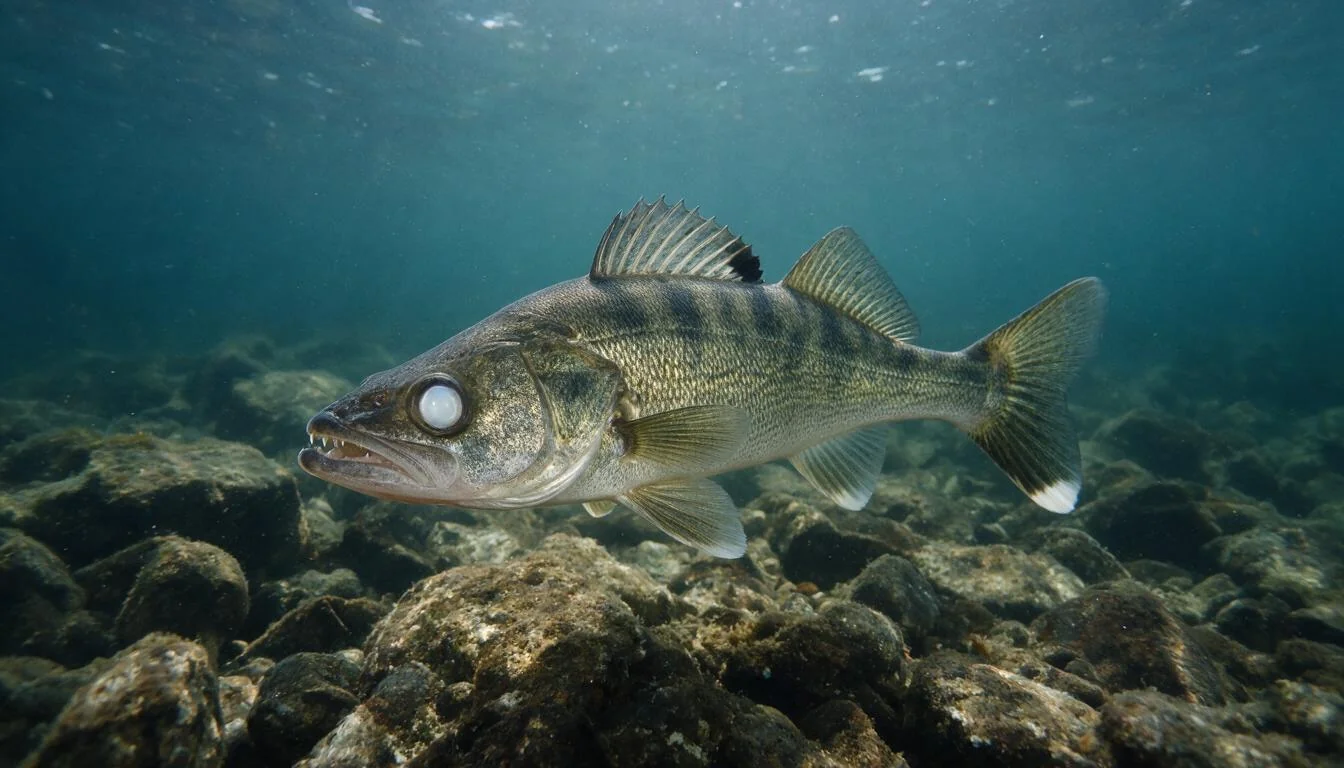
The fish's name comes from its most distinctive feature: the large, glassy eye. A reflective layer behind the retina called the tapetum lucidum makes the eye look milky or white and gives walleye extraordinary low-light vision — the key to almost everything about how they live and how you catch them.
You'll also hear them called yellow pike, pike-perch, or simply "pickerel" in Canada. Whatever the local name, three traits define the species:
- They're low-light hunters. Walleye see better than their prey at dusk, night, and dawn — that's when they feed.
- They're cool-water fish. Walleye thrive in big lakes and rivers with cool, oxygen-rich water, not warm ponds.
- They're delicious. Mild, flaky white fillets make walleye the most sought-after eating fish in the northern US.
Walleye vs Sauger: How to Tell Them Apart
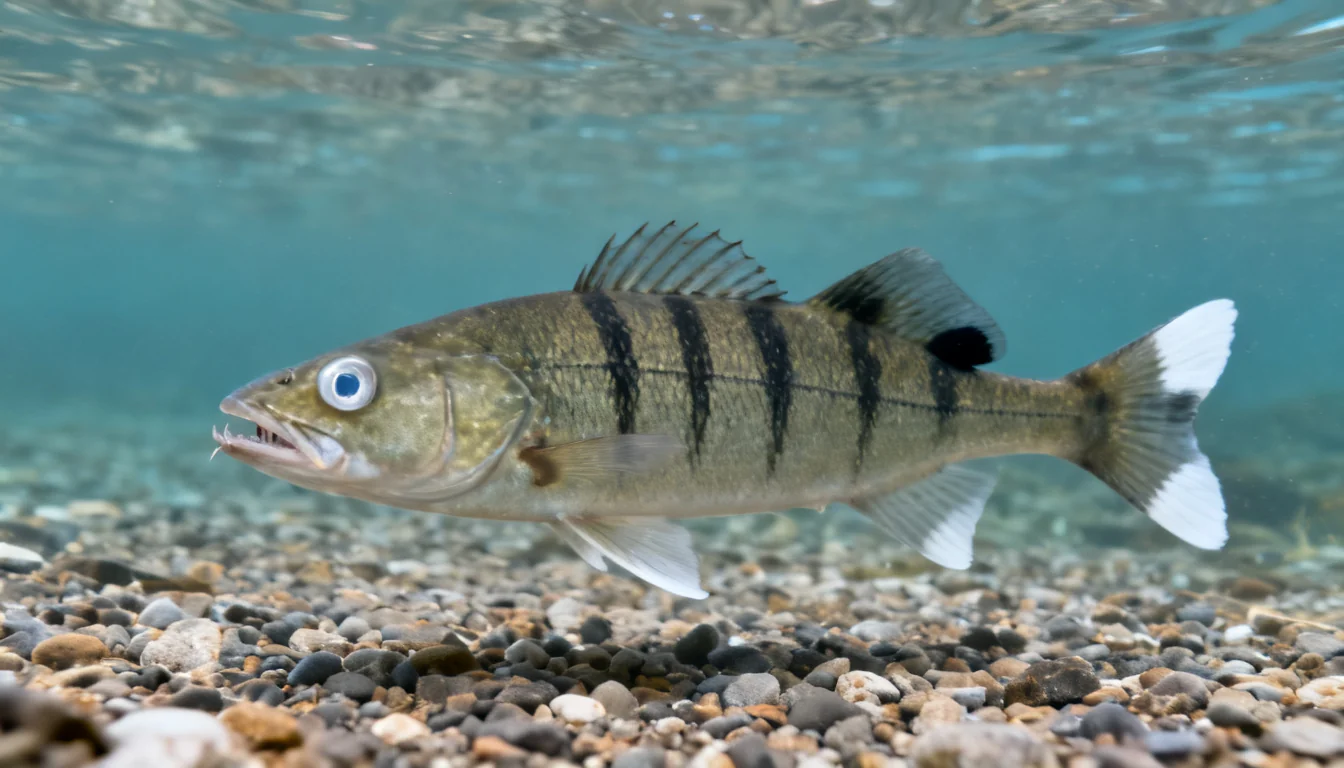
The sauger (Sander canadensis) is the walleye's closest look-alike and shares much of its range — especially in the Ohio and Mississippi river systems, where the two mix. Telling them apart is simple once you know the four field marks.
| Feature | Walleye | Sauger |
|---|---|---|
| First dorsal fin | No spots; membrane opaque | Dark spots; membrane clear |
| Blotch at rear of dorsal fin | Large dark blotch | No dark blotch |
| Body color | Olive, gray, or silver | Bronze or brown |
| Lower tail fin | White tip on the lower lobe | No white tip |
| Eye | Glassy white (reflective) | Smaller, less reflective |
The quickest checks: look for the white tip on the lower tail lobe and the dark blotch behind the first dorsal fin — walleye have both, sauger have neither. Sauger also run smaller on average, though large sauger can fool you at a glance.
Walleye Behavior & Habits
Understanding how walleye live explains why the best walleye fishing happens when other anglers go home.
Low-light feeders. Walleye have large, light-sensitive eyes built for dim conditions. They feed hardest at dawn, dusk, and after dark, and on heavily overcast days. In bright midday sun they pull deep or tuck tight to structure — which is why walleye anglers fish hard early and late.
Cool-water fish. Walleye prefer water in the low to mid 60s (°F) and avoid the warm shallows that bass love. In summer they follow the cooler, oxygen-rich water column, often 15-35 feet down by day.
Seasonal movers. Walleye follow a predictable annual cycle driven by water temperature:
| Season | Where They Are | What They're Doing |
|---|---|---|
| Spring | Rivers and lake reefs, 3-12 ft | Spawning run — April, water 40-55°F, moving into tributaries and gravel reefs |
| Summer | 15-35 ft, deep structure | Holding deep by day; moving shallow to feed at night |
| Fall | Mid-depth, following baitfish | Heavy feeding before winter — one of the best windows of the year |
| Winter | Deep basins, slow | Sluggish but catchable; popular ice-fishing target |
Schooling fish. Walleye gather in loose schools organized by size. Find one and you're usually near a dozen more — but the school moves often, following bait and temperature changes.
Walleye Habitat: Where They Live in the US
Walleye habitat centers on one thing: cool, open water with firm bottom structure. Native to Canada and the northern US — the Great Lakes, Hudson Bay, and Mississippi River drainages — walleye have been stocked into virtually every state in the continental US, from New York reservoirs to Texas lakes.
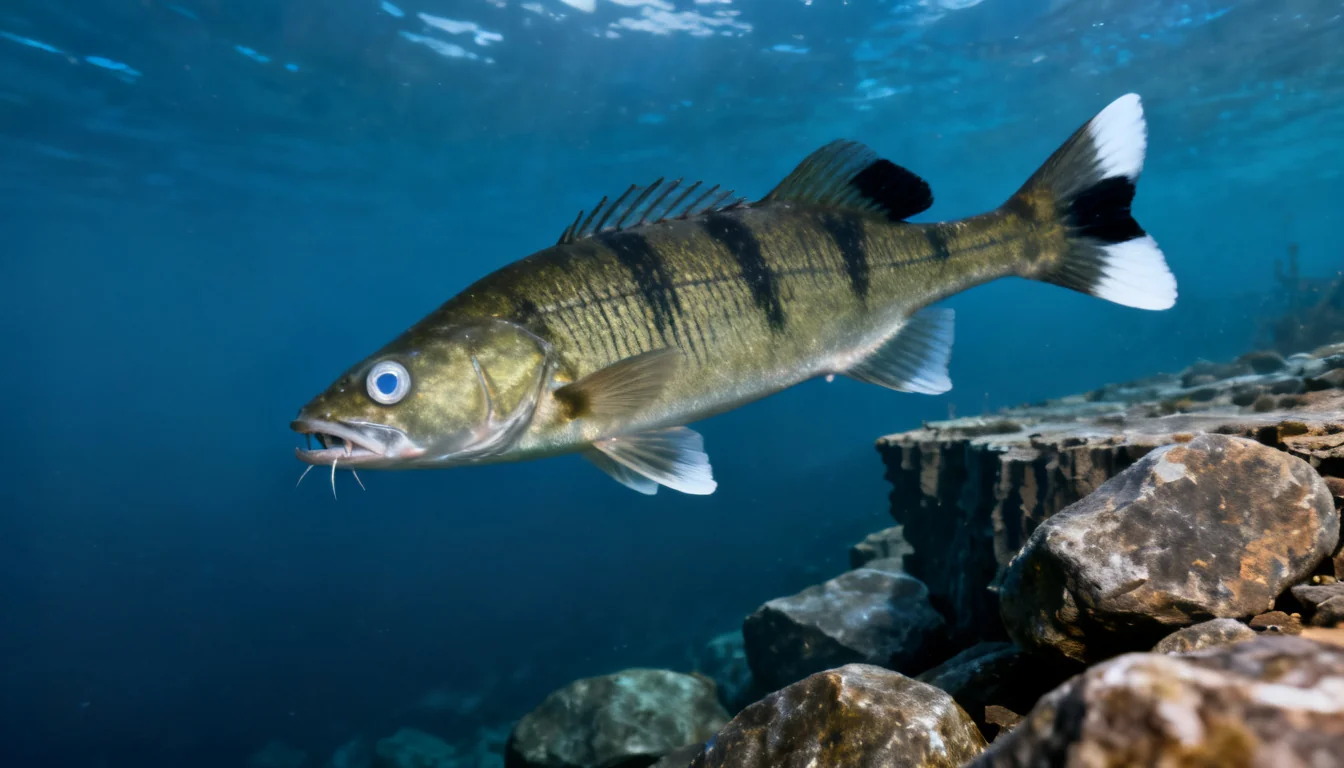
In any water body, walleye hold where three things meet: deep water access, current or wind, and firm bottom:
- Reefs, gravel shoals, and bedrock humps
- Points and underwater islands
- Weed edges and drop-offs
- River current breaks, bends, and dam tailwaters
- Wind-blown shorelines in spring
Famous walleye waters include Lake Erie (the most productive walleye lake in the world), Mille Lacs and Lake of the Woods in Minnesota, Lake Winnebago in Wisconsin, Devils Lake in North Dakota, and Lake Oahe on the Missouri River.
What Do Walleye Eat?
What do walleye eat? Almost anything that swims, but one thing above all: baitfish. Walleye are ambush predators that use their low-light vision to hunt schools of small fish.
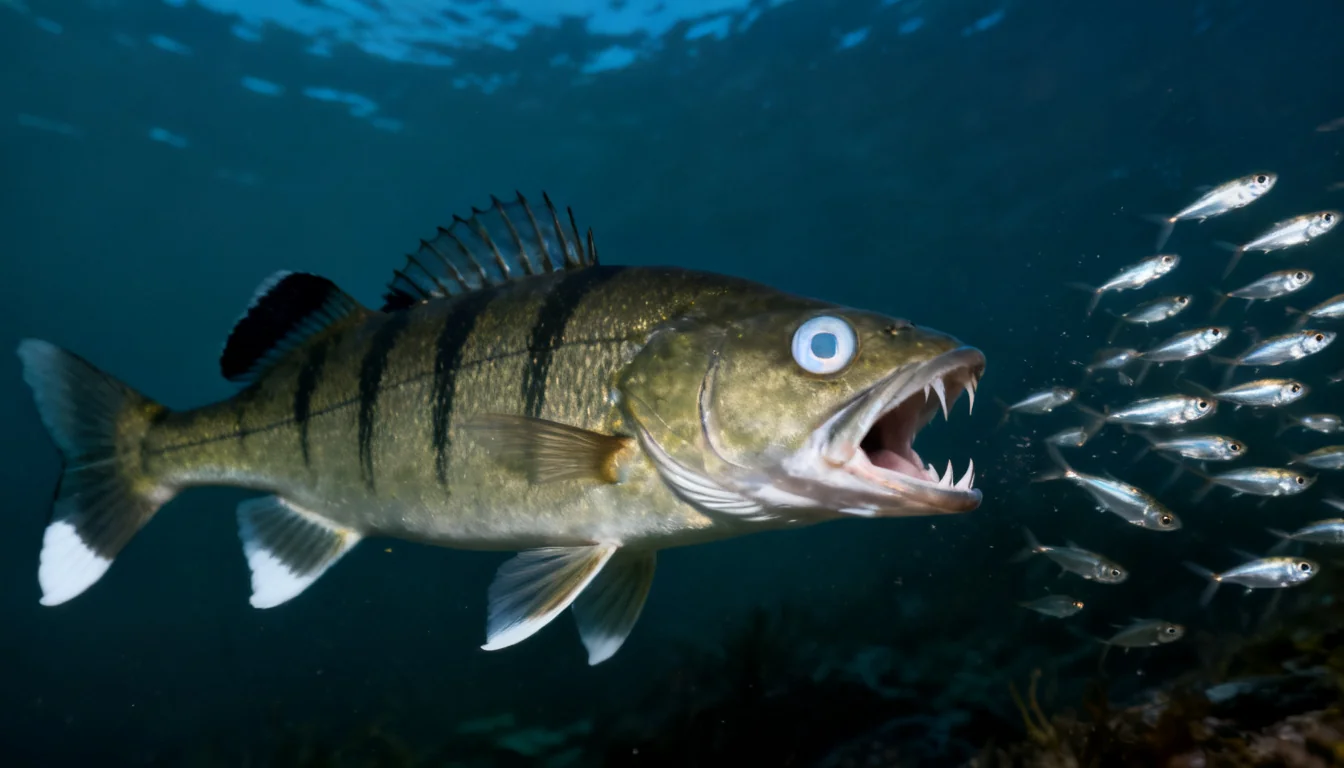
- Shad and minnows — gizzard shad, emerald shiners, spottail shiners, and fathead minnows make up the bulk of the diet in reservoirs and rivers
- Yellow perch — a favorite prey of big walleye in northern lakes (yellow perch are a staple wherever the two share water)
- Cisco and other cold-water baitfish — important in deep northern lakes
- Crayfish and insects — mayfly nymphs and other aquatic insects, especially in rivers
- Small walleye — large walleye are cannibals and will eat smaller members of their own species
The classic rule applies: find the baitfish, find the walleye. That's why trolling anglers watch their fish finders for bait balls as much as for walleye arches.
How to Catch Walleye
Walleye fishing comes down to matching two things: the low-light window and the fish's position in the water column. The two techniques that catch more walleye than everything else combined are jigging (casting or vertical jigging a jig tipped with a minnow or soft plastic along the bottom) and trolling (pulling crankbaits or spinner rigs at controlled depths).
The complete system — timing, gear, baits, rigs, and spot selection — is in our companion article: How to Catch Walleye.
Walleye Size: How Big Do They Get?
Walleye size varies with latitude and forage, but the averages hold nationwide:
- Typical catch: 14-22 inches, 2-4 lb
- A solid fish: 24-27 inches, 5-7 lb — a great day's walleye in most lakes
- A trophy: 28-30 inches, 8-10 lb or more; a 10-pounder is the fish of a lifetime for most anglers
Growth rates vary widely with latitude and forage. Northern walleye grow slowly but live long — 10-15 years is common, and the oldest on record was aged at about 29. Southern reservoirs can put on size faster, yet the giants come from both ends of the range.
The all-tackle world record is a 25 lb 0 oz walleye caught at Old Hickory Lake, Tennessee, in 1960 — a southern-water fish. In practice, a 10-pound walleye earns bragging rights in any state, and many state records fall between 12 and 17 lb.
Are Walleye Good to Eat?
Yes — walleye might be the best-eating freshwater fish in North America. The fillets are white, firm, flaky, and mild, with almost no fishy taste and very few bones. It's the classic shore-lunch fish of the North Woods: filleted on the lake, breaded, and pan-fried in butter within hours of being caught. Walleye also grill, bake, and blacken beautifully.
Because walleye are so prized, most states enforce size minimums (commonly 14-18 inches) and daily limits (often 4-8 fish) to protect the resource. Always check local regulations — and see our walleye recipes collection for ways to turn your catch into dinner.
Walleye FAQ
What is the best time of day to fish for walleye?
Dawn, dusk, and after dark — walleye feed in low light thanks to their reflective eyes. Heavily overcast days also produce good daytime bites. In summer, night fishing on shallow flats is one of the most consistent walleye patterns in the country.
What is the world record walleye?
The all-tackle world record walleye is 25 lb 0 oz, caught at Old Hickory Lake, Tennessee, in 1960. It still stands as the benchmark more than six decades later, and most state records across the Midwest and Great Lakes fall in the 12-17 lb range.
Why do walleye have white eyes?
Walleye eyes look milky or white because of a reflective layer behind the retina called the tapetum lucidum. It acts like a mirror, bouncing light back through the eye so walleye see exceptionally well in dim water — the adaptation that lets them hunt at dusk, night, and dawn.
Do walleye bite at night?
Yes — night is one of the best times to catch walleye, especially in summer. They move into shallow flats, reefs, and weed edges after dark to feed on baitfish, and they bite crankbaits, jigs, and live bait readily under the cover of darkness.
Are walleye and sauger the same fish?
No. They're close cousins in the same genus, but walleye have a white-tipped lower tail fin and a dark blotch on the rear dorsal fin, while sauger have spotted dorsal fins, a bronze-brown color, and no white tail tip. Sauger also stay smaller on average.
What is the best bait for walleye?
Live minnows (shiners and chubs) are the classic walleye bait, followed by nightcrawlers and leeches. Among lures, 3-4 inch soft plastics on 1/4 oz jigheads and shad-style crankbaits catch more walleye than anything else.
The Bottom Line
The walleye is the signature game fish of the northern US — a cool-water predator with eyes built for the dark, a taste for baitfish, and some of the best fillets in freshwater. Learn the ID marks, fish the low-light windows, and target reefs, points, and drop-offs, and you'll connect with one of North America's most rewarding freshwater species.